
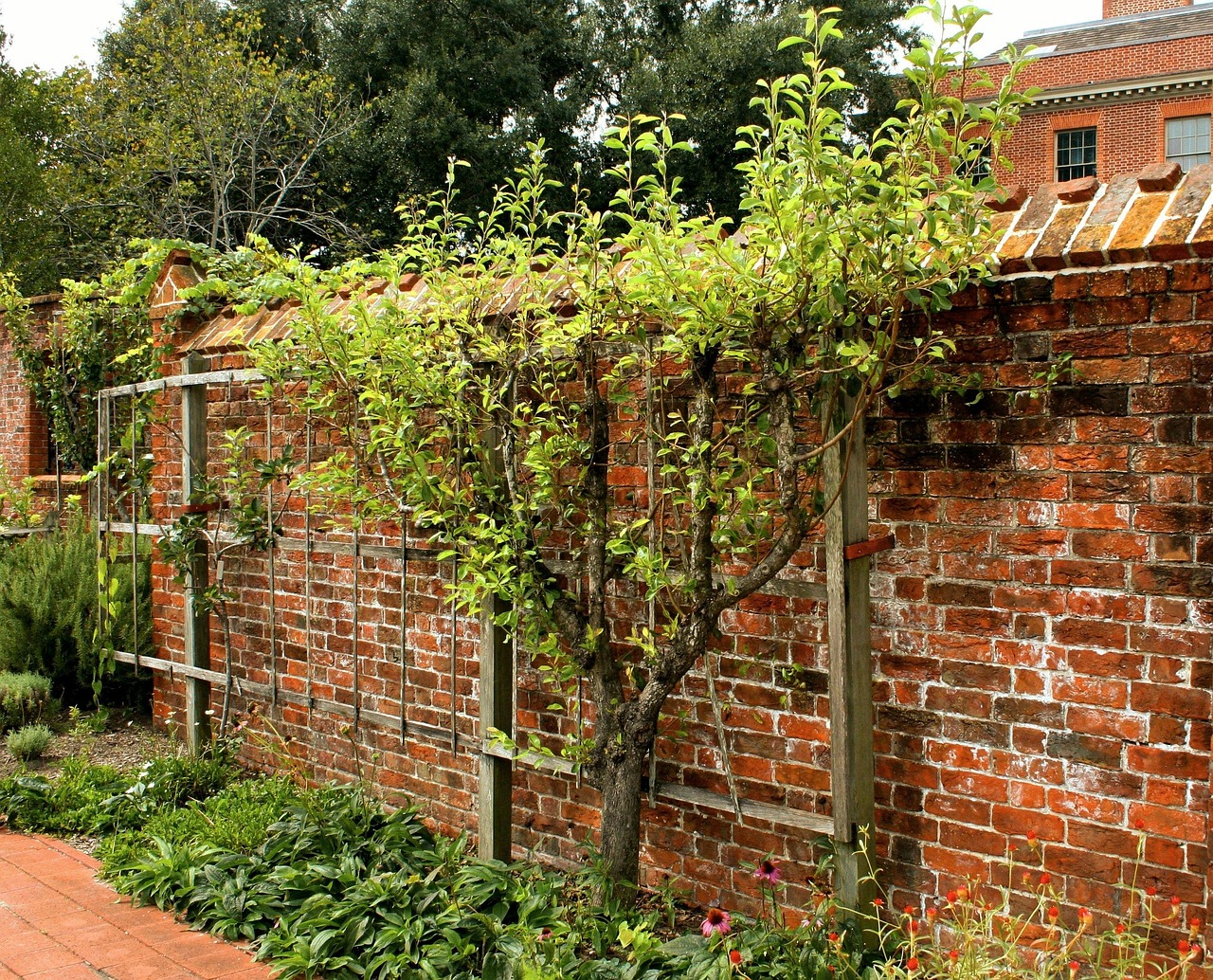
Wall-trained Fruit Trees: Maximizing Space and Yield in Urban Gardens
Wall-trained fruit trees are a smart choice for those with limited garden space. These trees are pruned and shaped to grow flat against walls or fences, making them both functional and decorative. By choosing wall-trained varieties, you can enjoy fresh fruit while maximizing your garden’s visual appeal.
Espalier is a popular method for training fruit trees to grow in a two-dimensional plane. This technique allows you to grow varieties like apples and pears in a compact form, perfect for urban gardens or small backyards. Not only do wall-trained trees save space, but they also create attractive features in your landscape, enhancing the beauty of any outdoor area.
Whether you have a small balcony or a sprawling yard, wall-trained fruit trees can make a difference. They provide delicious fruit and add charm to your space without taking up too much room. You can enjoy fruitful gardening with style and efficiency.
Basics of Wall-Trained Fruit Trees
Wall-trained fruit trees are a smart choice for gardening. They offer unique benefits and require specific techniques for success. You can create beautiful, productive fruit trees that save space and enhance your outdoor area.
Benefits of Wall Training
Wall training fruit trees brings several advantages. First, you save space by growing the trees flat against a support like a wall or trellis. This is perfect for small gardens or patios.
Second, these trees can receive more sunlight, which improves fruit quality. The warmth from the wall also helps extend the growing season.
Lastly, wall training makes harvesting easier. With the trees at a manageable height, you can pick fruit without straining or climbing.
Selection of Suitable Fruit Trees
Not all fruit trees are ideal for wall training. Here are some popular choices:
- Apples: They adapt well to training and can produce abundant fruit.
- Pears: These trees are strong and also suitable for the espalier method.
- Cherries: Sweet and sour varieties work well but need careful pruning.
When selecting trees, consider their growth habits and your climate. Choose varieties suited to your region for the best results.
Understanding Espalier, Fan and Cordon Training
Wall training uses specific techniques. Two common methods are espalier and fan training.
- Espalier: This method involves arranging branches horizontally to create a flat shape. It works well for privacy and garden aesthetics.
- Fan Training: In this approach, branches grow outward in a fan shape. It is great for maximizing sunlight and airflow around the tree.
- Cordon Training is another option. Here, branches grow in long, straight lines. This method is often used for smaller fruits like grapes and is space-efficient.
Each training method has its unique characteristics, so choose the one that matches your style and space.
Cultivation and Care
Taking care of wall-trained fruit trees involves several important aspects, including proper planting, consistent pruning, effective pest management, and appropriate soil conditions. Each of these factors plays a crucial role in the health and productivity of your trees.
Planting and Initial Training
When planting your wall-trained fruit trees, choose a well-drained spot that receives full sun for at least six hours a day. Ensure you have about 8 feet of linear space between the wall and your tree.
Dig planting holes about 6 inches from the wall for good air circulation. Space the tree at least 4 to 6 inches from the wall to prevent fungal issues. Once planted, begin training the tree by gently attaching branches to a support structure, like wires or trellises. This early training sets the foundation for a healthy shape.
Pruning Techniques
Pruning is essential for maintaining the shape and size of your wall-trained fruit trees. Regular pruning allows for more sunlight and better air circulation.
In winter, focus on removing dead or weak branches. Summer pruning can help control growth and encourage fruiting. Remove shoots that grow outwards or towards the wall. Use sharp, clean tools to make clean cuts.
Always prune just above a bud and avoid cutting too much at once. Keeping branches spaced evenly will help the tree develop a balanced structure.
Pest and Disease Management
Regular checks for pests and diseases are important. Common pests like aphids and spider mites can affect fruit trees.
You can manage pests by encouraging beneficial insects, like ladybugs. Additionally, applying insecticidal soap can help control infestations.
For diseases, ensure good air circulation by properly spacing and pruning your trees. If you notice any signs of fungal infections, treat them with a suitable fungicide. Always remove any diseased leaves or branches promptly to minimize spread.
Soil and Fertilization Requirements
Well-drained soil is crucial for your fruit trees. Use a mix that retains moisture but does not become waterlogged.
Amending your soil with organic compost can improve nutrient levels and drainage.
Fertilize in early spring with a balanced fertilizer that supports growth. Follow the recommended rates on the fertilizer package to avoid over-fertilizing. Monitor your trees for nutrient deficiencies, such as yellowing leaves, which may indicate a need for additional nutrients.